
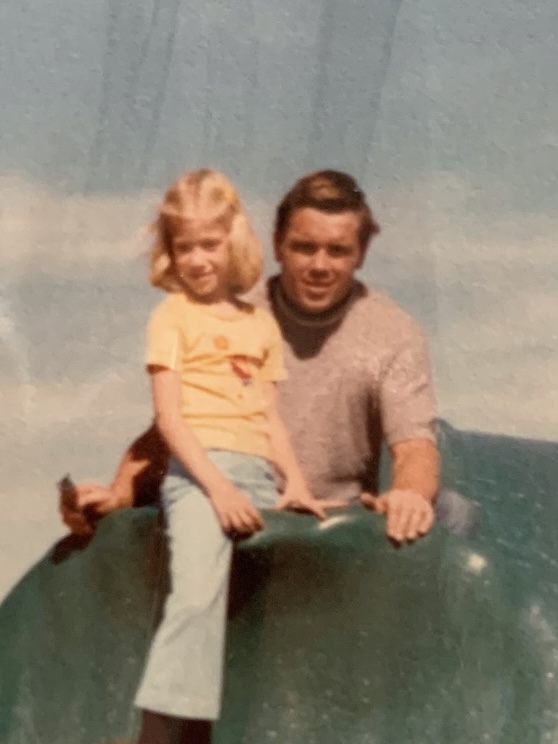
My dad told the best bedtime stories. He made them up as he went, weaving magic into every word. The framework remained the same, but the details changed each night, as if the story had a life of its own.
It always began with a little girl and her dad. Because she had been such a good little girl–kind or generous or helpful–her dad told her she could have anything she wanted. The humble little girl then set out on a quest to discover what her heart truly desired. Each night, she explored her options: a shiny red wagon, a little pony, a fancy dress. But the ending never changed. She always chose something simple and meaningful–like a locket necklace or a journal of her very own.
Stories in my head
I adored this story. It fascinated me how my dad could weave such vivid worlds from his imagination. I didn’t believe I had inherited his creative gift, but later in life, I realized I, too, had a knack for telling stories–just not always the beneficial kind.
As an analyzer of people, I began crafting stories in my mind. I imagined what others thought of me or what their motives might be. I even invented dramatic futures for myself–fanciful outcomes to problems or situations that had no grounding in reality. These stories, while vivid, rarely turned out to be true.
I’ve believed that someone disliked me and created an entire list of reasons why. I’ve woven plots where someone wanted to harm me when I had no real evidence about her feelings. I’ve lived through imagined heartbreak of losing a job or a loved one dying, all in my head, without any of it actually happening.These stories wove an elaborate world around me, but they were only convincing illusions.
Coming back to reality
What once delighted me as a child became a heavy burden as an adult. The truth is, I often assume people are thinking about me far more than they are. Most of the time, they’re simply living in their own heads, just as I am. And it’s dishonest to think I know someone’s motives or feelings unless they’ve chosen to share them. Even then, it’s easy to misinterpret what I see or hear.
Choosing to live in reality was my first step toward freedom. The next was to stop writing false stories in my mind. These simple choices have allowed me to live more fully in the life that is actually in front of me–one that doesn’t need to be imagined to be meaningful. In the end, my dad’s stories weren’t about wagons or ponies–they were about finding what truly matters. For me, that’s learning to live honestly, fully, and in the present.